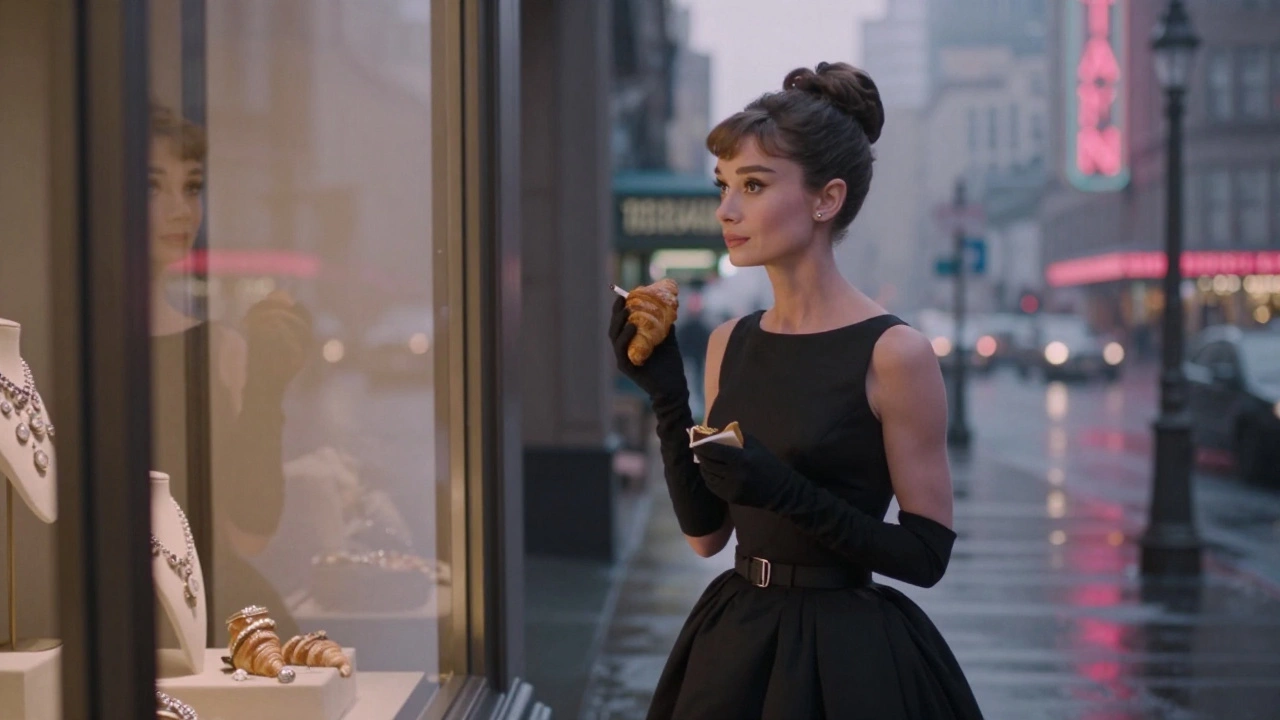
Breakfast at Tiffany’s isn’t just a movie. It’s a moment frozen in time-black gloves, a little black dress, a croissant in one hand, a cigarette in the other, and Audrey Hepburn staring into the window of a jewelry store like she’s trying to figure out if happiness comes in a box. Released in 1961, it didn’t just make Holly Golightly a cultural icon; it turned a story about loneliness, illusion, and survival into something timeless. And yet, if you watch it today, you’ll notice how much of it is built on fantasy. The New York of the film isn’t real-it’s a dream filtered through pastel lighting and jazz scores. But that’s exactly why we still come back to it.
There’s a strange comfort in watching someone like Holly, who moves through life like a ghost in designer clothes, pretending she’s free because she refuses to be tied down. She’s not a villain. She’s not even really a heroine. She’s a woman trying to outrun a past she can’t name, and in a way, that’s why some people still relate to her. If you’ve ever felt like you needed to be someone else to be loved, you’ve met Holly. There’s even a moment in the film where she says, "I’m not a girl, I’m a girl." It’s not a typo. It’s a confession. And if you’ve ever searched for an escort girl in uk not for the service, but for the company, you understand that kind of loneliness.
What Makes Holly Golightly So Unforgettable?
Audrey Hepburn didn’t play Holly Golightly. She became her. The way she tilted her head when she was nervous. The way she bit her lip before speaking. The silence between her words-that’s where the real performance lived. Holly doesn’t explain her past. She doesn’t need to. We see it in the way she avoids eye contact with the man who loved her. We see it in the way she feeds the stray cat, never naming it, never claiming it. She’s afraid to be owned, even by affection.
That’s the heart of the film. It’s not about wealth. It’s not about fashion. It’s about the cost of pretending. Holly wears her armor so well, even the audience forgets she’s scared. And that’s what makes her tragic. She doesn’t need a prince. She needs someone to say, "I see you," without trying to change her. No one does. Not even the narrator, Paul, who spends the whole movie watching her like she’s a museum exhibit.
The Fashion That Outlived the Film
Givenchy’s little black dress? Still in every woman’s closet. The oversized sunglasses? Still sold in vintage shops in Soho. The pearls? Still worn by women who want to look elegant while feeling broken. The film didn’t just set trends-it created a visual language for emotional isolation. Holly’s style isn’t about status. It’s about camouflage. She dresses like she belongs in a world that doesn’t want her. And in doing so, she becomes more real than any character who ever got a happy ending.
Modern fashion still references this look. Think of the way Bella Hadid walks a runway with that same distant gaze. Or how Gigi Hadid’s 2019 Met Gala dress echoed Holly’s silhouette. It’s not nostalgia. It’s recognition. We still dress like Holly because we still feel like her.
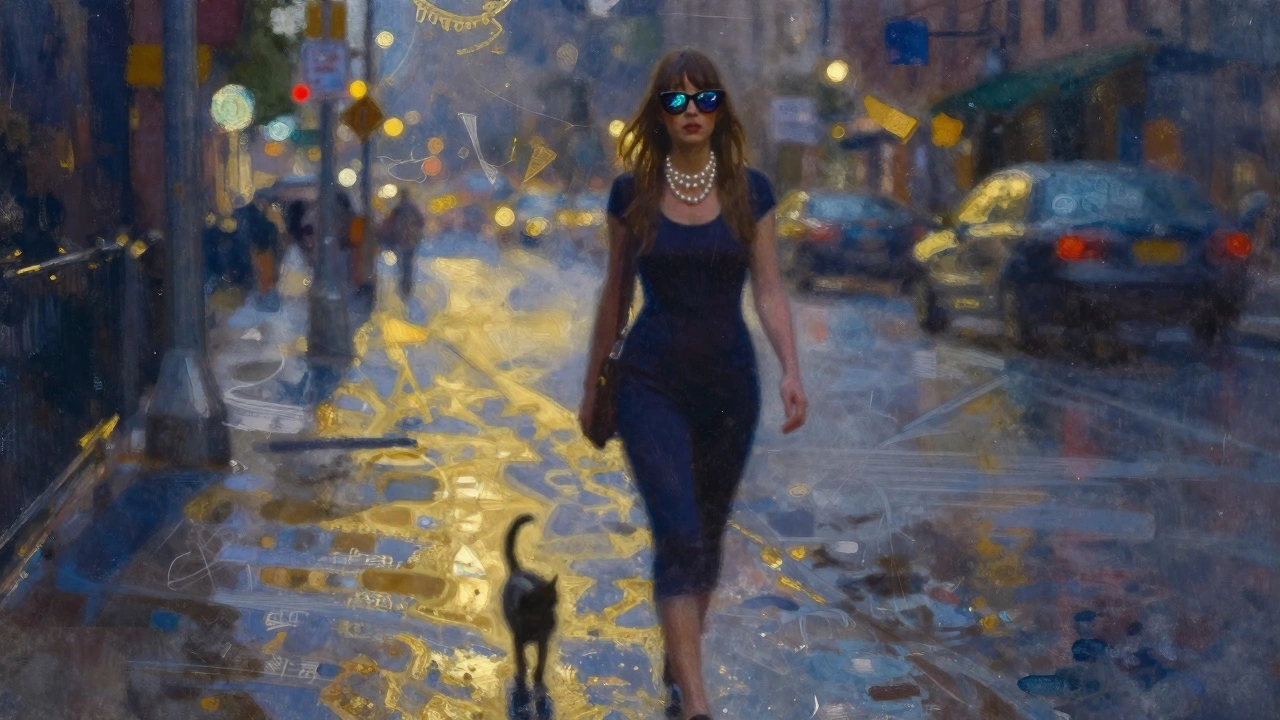
The Music That Still Echoes
"Moon River" wasn’t just a song. It was a prayer. Written by Henry Mancini and Johnny Mercer, it’s simple enough for a child to hum, but layered enough to carry a lifetime of longing. Hepburn sang it herself-off-key, trembling, real. That’s why it hurts. She didn’t try to sound perfect. She tried to sound like someone who’d spent nights waiting for something that never came.
The song plays twice. Once in the opening, when Holly stands by the window, dreaming. Once near the end, when she’s alone again, after everything falls apart. The music doesn’t change. Neither does she. That’s the point. Some people never get the ending they wanted. But they still get to sing.
Why the Film Feels Out of Step Today
Let’s be honest: Breakfast at Tiffany’s doesn’t age well in every way. The portrayal of the character I. Y. Yunioshi is a painful caricature. The film’s treatment of gender, class, and race is dated, even for its time. It’s a product of its era, and we can’t ignore that. But we also can’t throw it away. Instead, we watch it with clearer eyes. We see Holly’s pain without romanticizing her exploitation. We admire the dress without ignoring the system that made her wear it.
That’s the challenge now. Can we love something that’s flawed? Can we hold space for beauty and critique at the same time? The answer isn’t to reject it. It’s to understand it. Holly wasn’t a symbol of liberation. She was a symptom of a world that told women they had to be either glamorous or invisible.
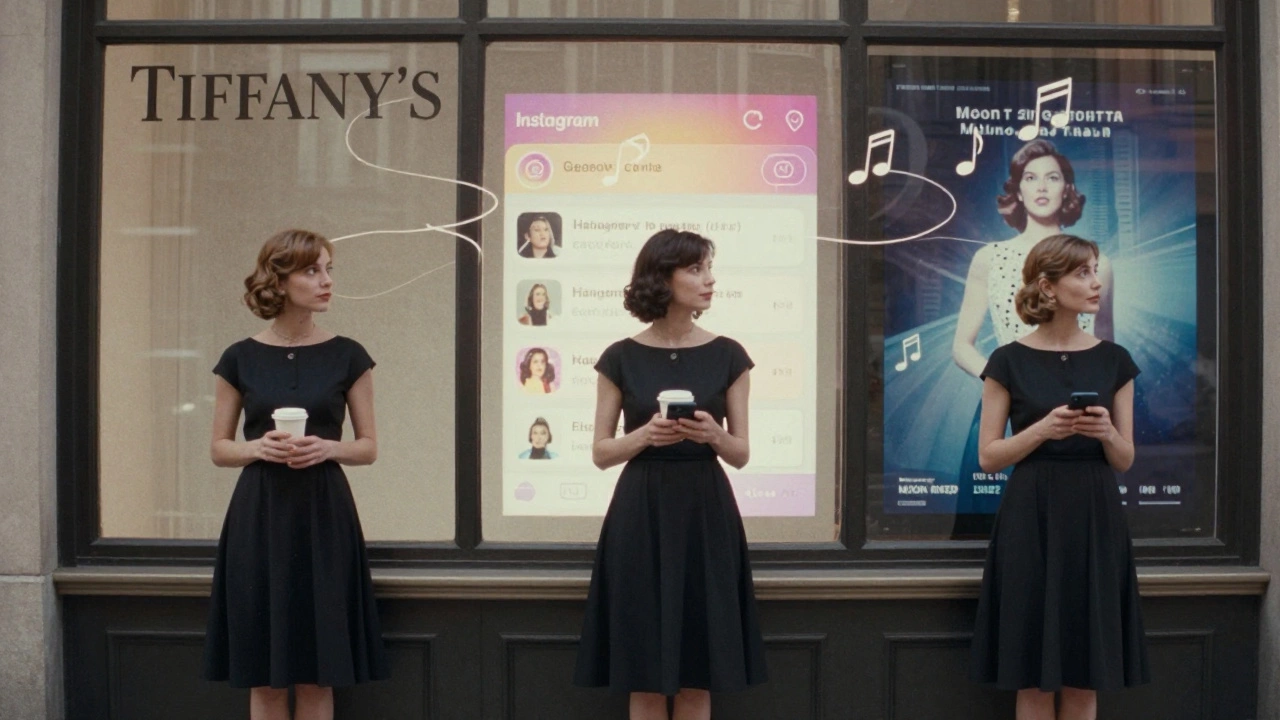
Where Holly Golightly Lives Today
Look around. You’ll find Holly in the woman who works two jobs to afford rent in London, then puts on lipstick before heading out for a date she knows won’t last. You’ll find her in the Instagram influencer who sells dreams while quietly drowning in anxiety. You’ll find her in the woman who says she’s "just having fun" while her heart is breaking. The world has changed, but the hunger for belonging hasn’t.
And that’s why the film still works. It doesn’t offer solutions. It doesn’t fix anything. It just says: I see you. Even if you’re pretending.
There’s a scene near the end where Holly walks away from the apartment, leaving behind everything she thought defined her. She doesn’t look back. She doesn’t cry. She just keeps walking. And for a moment, you think she’s free. But then you notice the cat-still untethered, still nameless, still wandering. She didn’t save it. She didn’t save herself. But she kept walking. And maybe that’s the only victory we get.
Breakfast at Tiffany’s isn’t about the past. It’s about the quiet, everyday acts of survival that never make headlines. It’s about the woman who puts on a dress and pretends she’s okay. The woman who still believes in love, even after she’s learned it doesn’t come in boxes. The woman who, in 2025, still walks past jewelry stores, wondering if happiness is just one more thing she can’t afford.
And somewhere in London, a woman might be scrolling through ads for a uk glamour girl escort, not because she wants to be seen, but because she wants to feel seen. That’s the same hunger Holly had. Only now, it’s digital. Only now, it’s paid.
What the Film Gets Right About Loneliness
Loneliness isn’t about being alone. It’s about being misunderstood. Holly never asks for pity. She doesn’t beg for love. She just exists-beautiful, broken, and brave. And that’s why, 60 years later, we still watch her. We don’t want to be her. We want to be understood like her.
There’s a moment when Paul says, "I think you’re a very good girl." And she laughs. Not because it’s funny. Because it’s the first time someone’s called her "good" without meaning it as a joke. That’s the moment the film cracks open. Not with a kiss. Not with a rescue. But with a word that means nothing… and everything.
That’s the real breakfast at Tiffany’s. Not the croissant. Not the coffee. Not the jewels. It’s the quiet realization that sometimes, the only thing we need is to be called good-even if we don’t believe it yet.
And if you’ve ever sat in a café in Melbourne, watching the rain outside, wondering if anyone would notice if you disappeared-you already know what Holly was trying to say.
There’s a woman in Manchester who posts photos of her outfits with the caption "Just another day." No one comments. She doesn’t care. But she still posts. That’s Holly. And she’s still out there. Waiting. Walking. Pretending. And somehow, still singing.
Maybe that’s why we keep watching. Not to escape. But to remember we’re not alone in the pretending.
And somewhere, in a flat in Brighton, a woman might be scrolling through listings for a uk escort girl, not for the transaction, but for the silence that comes after. The kind of silence where you don’t have to explain why you’re tired.